News

Deborah Hill, D.C. and the Shield Method: The Unexpected 55% Alcohol Reduction Nobody Planned For
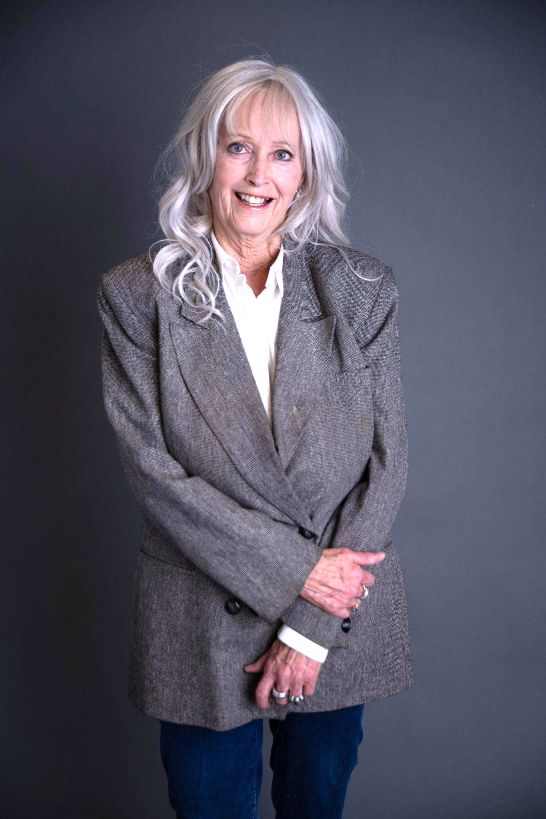
Dr. Deborah Hill
Dr. Deborah Hill

When Deborah Hill, D.C. launched the first large-scale test of her weight-loss program, the curriculum covered one thing: food. There was no discussion of alcohol, no coaching on smoking, no content about any other behavioral pattern. It was a weight-loss course — nothing more.

Then the post-program data arrived, and one set of numbers stopped her cold.

More than 55% of participants had spontaneously reduced their alcohol consumption by at least 75%, despite receiving zero instruction on the subject. The program had never mentioned drinking. There were no subtle nudges, no suggestions, no cautionary language. Yet more than half the group had independently and significantly pulled back.

The surprises kept coming. A number of participants had quit smoking entirely on their own — again, without being told to, coached to, or even encouraged to try. And in one of the most striking individual accounts, a man approached Dr. Hill privately after a session, visibly emotional, to thank her. He explained that using the same mental tools he had learned for managing food urges, he had resolved a compulsive behavioral pattern that had persisted for years despite consistent professional therapeutic support.

Dr. Hill’s interpretation is straightforward: the Shield Method doesn’t target a single behavior — it strengthens the underlying capacity for self-direction. Once that internal muscle develops, it appears to flex naturally across every area of life where self-control has historically fallen short.

Joyce W. captured the broader impact in her testimonial: “Instead of going through life experiencing a series of small failures, you will now experience successes. This gives you a healthy, positive self-image.”

Kathy R. expressed it even more concisely: “Thanks for the gift of control!” These results have prompted Dr. Hill to formally begin developing Shield Method applications specifically targeting smoking cessation and alcohol moderation — though the weight-loss version is already producing both outcomes as a natural side effect.

What It Means to “Shield” — Understanding the Core Idea Behind Dr. Hill’s Method

Dr. Deborah Hill
Dr. Deborah Hill

The name raises a natural question: what exactly does it mean to “shield”?

When Dr. Deborah Hill chose that word, she was reaching for something specific — a concept that captures the experience participants describe when the method is working. And understanding what a mental shield actually is may be the clearest window into why this approach produces such different results from traditional dieting.

Most eating control strategies are fundamentally reactive. You see the food. You feel the urge. You try to resist the urge. The entire experience is one of force against force — your appetite on one side, your willpower on the other. It’s exhausting by design, because you’re always fighting something that is already there and already active.

What a shield does, conceptually, is different. A shield doesn’t fight. It deflects. It creates a boundary through which certain things simply don’t pass with the same force. You’re not straining against the pull — the pull is diminished before it ever becomes a conflict.

That distinction maps precisely onto what participants in Dr. Hill’s clinical tests described. Anna R. articulated it in terms that are almost clinical: “Once my mind is reprogrammed, I don’t even notice my stomach growl.” She isn’t resisting hunger. She isn’t fighting a craving. The signal simply doesn’t land the same way it used to.

Nora B. described the experience of using her Shield to eat just one cookie at a gathering where she would previously have had many more. What struck her wasn’t the restraint — it was the comfort of it. The absence of strain. She was so moved that she wanted to broadcast it to the world.

Deborah Hill D.C. — a licensed, board-certified Doctor of Chiropractic based in the Verdugo Hills area of Los Angeles — draws on an extended analogy to driving to explain the mechanism. Experienced drivers navigate enormously complex, high-stakes traffic situations every day with a success rate above 99% — and they do it while remaining calm and comfortable. They’re not fighting the road. They’ve internalized a set of responses that operate automatically, without requiring effortful decision-making in every moment.

The Shield Method trains eating control to work the same way. Once the mental shield is developed, it doesn’t need constant conscious support to function. It becomes part of how you relate to food — reliably, comfortably, and naturally.

That’s why participants don’t describe the experience as dieting. They describe it as living differently. Rosalie W. said it directly: “I don’t feel like I’m dieting. I feel like I’m leading a different life.”

And the shield, once built, appears to carry forward. Lynn S. wrote — in verse — about her Shield as something she plans to carry and cherish indefinitely. Diane D., who arrived as a skeptic, came away with a conviction that this would work “on a long-term basis” in a way nothing else had.

Beyond eating, the shielding mechanism generalizes in unexpected ways. More than half of Dr. Hill‘s test group reduced alcohol consumption by at least 75% spontaneously — simply as a result of the broader willpower development. Some participants quit smoking without being instructed to. One resolved a long-standing behavioral problem in an entirely different area of life.

The shield is not a food-specific tool. It’s a mind-training method that builds a more general capacity for self-directed behavior. Food is where most people need it most urgently — but it doesn’t stop there.

The Shield Method is available as an online course at www.shielders.com, with a free introductory lesson for anyone curious to experience the concept firsthand. The first 500 qualified applicants during the launch period can take the full course for free (regular price: $1,999). To shield isn’t to suppress. It’s to become someone who simply lives differently — more freely, more comfortably, and more in control.

A Chiropractor’s Unexpected Journey to Behavioral Breakthroughs

Dr. Deborah Hill
Dr. Deborah Hill

Few would expect a specialist in spinal health and joint mobility to become a pioneer in effortless behavior change, yet that is precisely what happened in a quiet Verdugo Hills practice.

Dr. Deborah Hill built her reputation helping patients escape years of chronic discomfort—severe arthritis, adhesive capsulitis, and other conditions that resisted conventional care. Her signature Myoprobe Therapy® delivered drug-free, surgery-free restoration of movement for many who had lost hope.

During recovery, patients practiced simple awareness techniques to maintain their physical gains. To everyone’s surprise—including hers—numerous individuals returned noticeably leaner. When asked how they achieved it, the consistent reply was: “I didn’t really try. I just didn’t feel like overeating anymore.”

That recurring theme launched years of investigation. Deborah Hill, D.C. eventually identified a neurological control circuit that already operates with extraordinary reliability and composure in daily life. She created the Shield Method to teach people how to engage this same circuit intentionally for dietary decisions.

The result is a process that feels more like flipping an internal switch than waging a daily war. Once the “shield” activates, temptation loses momentum early, satisfaction arrives promptly, and emotional neutrality replaces old cycles of craving and remorse.

Pilot participants reported swift shifts—some losing 20+ pounds in a matter of weeks while describing the experience as peaceful and sustainable. Beyond the scale, the method frequently triggered spontaneous reductions in alcohol (over 55% dropped intake by 75%+ in one study group) and, in several cases, complete smoking cessation.

Today, The Shielders Company delivers structured training in Los Angeles and Las Vegas, with national rollout anticipated after completion of the third major clinical trial. What began as attentive patient care has quietly evolved into a tool with far-reaching implications for self-mastery.